Learning
Research
July 16, 2026
Wingu News
Ethiopia's Investment Commission announced this month that the country attracted $4.32 billion in foreign direct investment (FDI) during the 2025/26 fiscal year, an 8% rise on the previous year. Commissioner Dr Zeleke noted that the figure does not yet include the pledges made during the fourth Invest in Ethiopia forum by companies still working through the licensing process. Alongside that headline number sat a set of details that matter just as much: 528 new investment licences issued, more than 260 projects moved into implementation, and exports from the country's Special Economic Zones up 80% year on year to $225 million.1
Taken together, these figures describe an economy that is not simply attracting capital on paper but converting it into operating businesses at a pace the Commission itself has flagged as exceeding target. What tends to get less attention in the coverage of numbers like these is what actually has to exist for that conversion to happen, and increasingly, the answer includes a functioning local cloud and data infrastructure market.
Growth on paper needs infrastructure underneath it
Every one of those 528 licences represents a company that will, at some point fairly early in its life in Ethiopia, need to decide where its data lives, how its systems talk to each other, and what happens if the connection to the outside world is interrupted.
For a manufacturing business exporting from a Special Economic Zone, that might mean enterprise resource planning systems and supply chain software. For a bank or a fintech entering the market on the back of the country's telecom liberalisation, it almost certainly means core banking systems, payment processing, and the kind of data residency requirements that regulators increasingly expect.
None of this is hypothetical. Ethio Telecom alone now serves around 87 million customers2 and has built its telebirr platform into a central pillar of digital financial services in the country, while the arrival of Safaricom Ethiopia as a second major operator has intensified competition specifically in data and enterprise segments rather than in mass-market mobile services. The infrastructure layer underneath Ethiopia's growth story is already under real strain, and record FDI figures only add to that pressure.
The cloud market is already pricing this in
Independent market research is beginning to reflect this shift with reasonably specific numbers. IMARC Group estimates that Ethiopia's cloud computing market reached $918.8 million in 2025 and projects it will grow to $5.7 billion by 2034, a compound annual growth rate of nearly 22% across the period.3 Zoom out to the wider region and the pattern holds with the Middle East and Africa cloud computing market projected to grow from just over $104 billion in 2025 to nearly $180 billion by 2032.4
These are not numbers generated in isolation from the investment climate; they are largely explained by it. Analysts researching the Ethiopian market consistently point to the same drivers behind this growth, namely the government's Digital Ethiopia strategy, the expansion of digital identity systems, e-commerce adoption, and the entry of international telecom players, all of which map fairly directly onto the same reform agenda the Investment Commission credits for this year's FDI performance.
Data sovereignty is becoming a practical requirement, not a preference
One detail from Ethiopia's recent digital transformation push is worth dwelling on. When Ethio Telecom launched its teleSign digital signature platform earlier this year, in partnership with the Ministry of Justice and the Federal Documents Authentication and Registration Service, it specifically highlighted that citizen, and institutional data would be hosted on local cloud infrastructure to ensure national control and data protection.
That framing, of local hosting as a matter of national digital sovereignty rather than simply operational convenience, is becoming increasingly common in government and enterprise conversations across Ethiopia. For foreign investors weighing up where to locate their systems, this has a fairly direct practical implication. Businesses entering a regulated sector, or bidding for government-adjacent contracts, are likely to find that routing data through infrastructure outside the country is no longer a straightforward option, even where it might once have been the cheaper or more familiar route. Local data centre capacity stops being a nice-to-have at that point and becomes a condition of doing business.
What this means for how investment actually gets delivered
If local hosting is becoming a condition of doing business, then having enough of it, built to a standard investors can trust, becomes a condition of growth. The Investment Commission's own priorities for the coming fiscal year include a telling phrase: expediting the movement of licensed projects into implementation. That is a polite way of describing a well-known problem across fast-growing markets, where the gap between a licence being granted and a business actually going live can be wide, and where infrastructure availability is very often the reason for the delay.
A company that has secured its investment licence and is ready to deploy capital does not want to discover that suitable, reliable, compliant hosting is the bottleneck standing between paperwork and production. This is precisely where local, carrier-neutral data centre providers earn their place in the story, offering more than server space. Facilities that hold recognised international certification, such as Tier III status from the Uptime Institute, give investors a way of assessing infrastructure risk in Ethiopia using the same benchmarks they would apply anywhere else in the world, which matters considerably when a due diligence team in London or Dubai is trying to sign off on a market they may not know well.
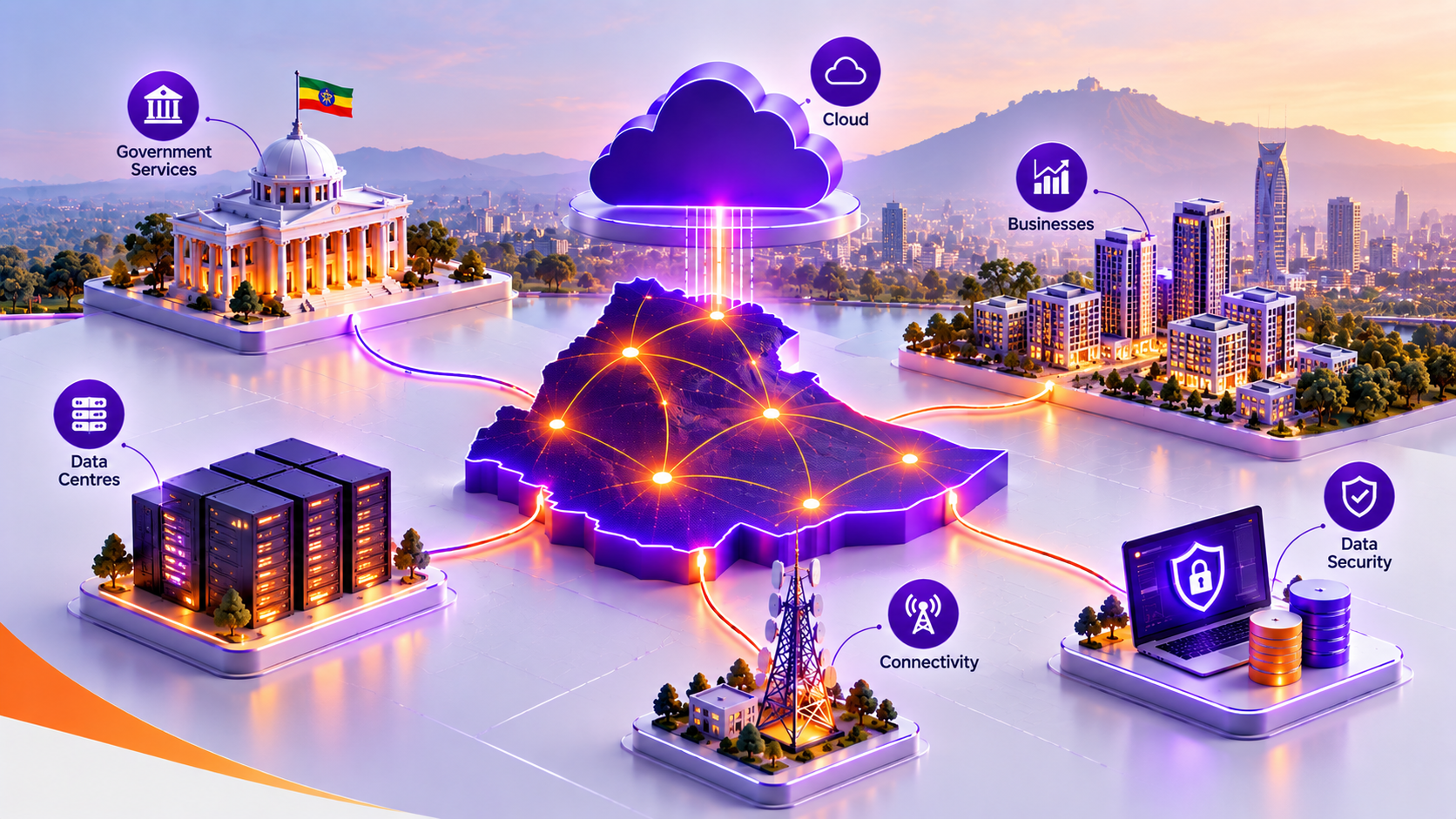
Wingu Africa's Tier III Certified data centre in Addis Ababa's ICT Park, the first facility in the country to hold that certification rather than design certification alone, is one example of the kind of infrastructure now available to support this pipeline of investment as it moves from licence to operation.
A market still building its foundations
Ethiopia's digital ecosystem continues to develop, as is typical of many fast-growing markets. Connectivity continues to improve alongside rising demand from businesses, government, and consumers, while investment in digital infrastructure is accelerating to support the country's broader economic transformation.
That evolution makes enterprise-grade local infrastructure increasingly important. As more international businesses establish operations in Ethiopia, the ability to host critical workloads in internationally certified, carrier-neutral data centres provides immediate benefits, including improved resilience, lower latency, stronger data sovereignty, and compliance with emerging regulatory requirements. Rather than waiting for every element of the broader digital ecosystem to mature, investors can build on infrastructure that already meets internationally recognised standards.
In that sense, the record FDI figures are more than a measure of capital inflows; they are an indicator of the growing demand for trusted digital infrastructure. As Ethiopia's investment pipeline continues to expand, secure, reliable, and locally hosted data centre capacity will remain an important enabler of businesses moving from investment approval to successful operation.
Learn more about us.