Learning
Research
February 24, 2026
Wingu News
Across East Africa, the way people work is changing, fast. Remote work, once a temporary response to global disruptions, has become a permanent feature of business life. Companies are no longer tied to a single office or city; teams can collaborate seamlessly across borders. At the heart of this transformation is cloud technology, providing the infrastructure that makes distributed work not just possible, but efficient, secure, and scalable.
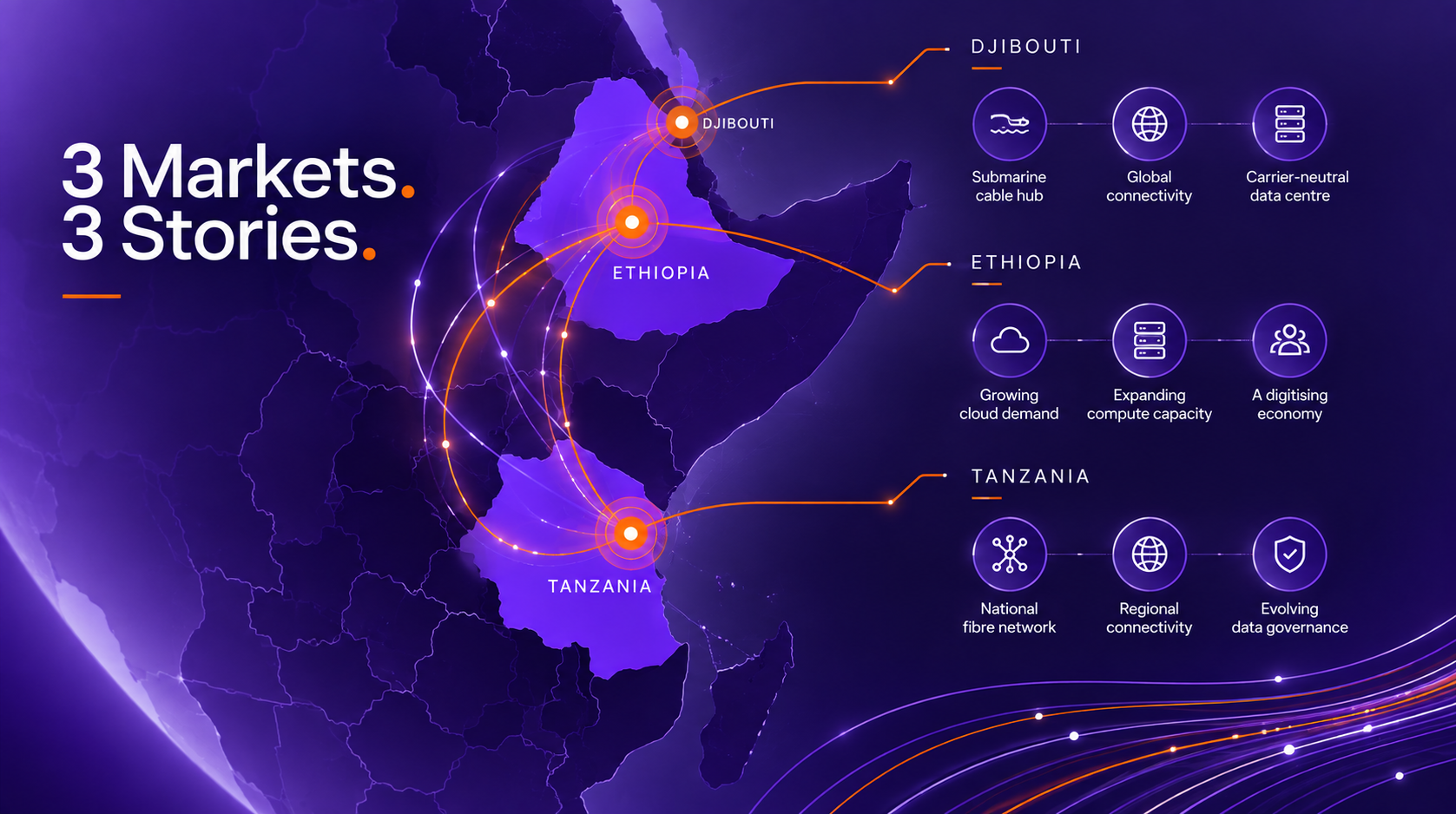
Cloud computing has become the backbone of modern enterprise operations because it removes dependence on physical location. For organisations in Tanzania, Djibouti, and Ethiopia, this shift is especially significant. Historically, businesses in the region have had to navigate unreliable infrastructure, inconsistent connectivity, and high costs for on-premises IT. Cloud solutions address these challenges directly, giving teams the freedom to work efficiently from anywhere while maintaining performance, security, and resilience.
The pace of cloud adoption across Africa reflects this transformation. According to the 2025 PwC Africa Cloud Business Survey, more than 60%1 of organisations on the continent now rely on cloud services as a core part of their digital strategy, with many accelerating migration plans to meet operational demands. Companies are moving beyond experimentation and focusing on strategic optimisation, often adopting multi-cloud or hybrid approaches to support distributed teams.
The Growth of Cloud Markets in East Africa
Cloud adoption in East Africa isn’t just a trend; it’s a rapidly growing market. Ethiopia’s public cloud sector, for instance, was projected to reach around US$566 million2 in revenue by 2025, with strong growth expected through 2030. Tanzania follows a similar path, with its public cloud market forecast to exceed US$265 million3 in 2025, driven by rising enterprise adoption.
Overall, East Africa is emerging as one of the fastest-growing cloud subregions. The market was projected to reach US$2.74 billion in 2025 and, growing at an annual rate of 24%, is expected to surpass US$8 billion by 20304. Surveys indicate that between 70% and 77%5 of organisations in the region are already using some form of cloud service. Growth is being driven by financial services modernising core systems, telecommunications providers scaling digital platforms, logistics operators digitising supply chains, public sector agencies advancing e-government initiatives, and startups leveraging scalable, pay-as-you-go infrastructure.
Cloud as the Infrastructure of Collaboration
Remote work thrives on reliable access to applications, secure data storage, communication tools, and enterprise systems. Cloud technology delivers all of this through centralised yet accessible platforms. Employees in Dar es Salaam, Addis Ababa, or Djibouti City can work on the same documents, join virtual meetings, and manage workflows in real time, without relying on local servers or physical offices.
This is particularly relevant in East Africa, where many organisations operate across borders. Regional trade integration and digital entrepreneurship mean teams are often dispersed by design. Cloud infrastructure removes traditional barriers, ensuring smooth collaboration, minimal latency, and continuity even when staff are spread across multiple markets.
Cloud-based productivity suites, enterprise resource planning tools, and development platforms also allow businesses to scale without proportionally expanding physical infrastructure. This flexibility is essential for growing enterprises and startups, many of which adopt remote-first or hybrid models from day one.
Resilience and Business Continuity in Emerging Markets
For East African organisations, resilience is a practical necessity. Power outages, fluctuating connectivity, and environmental challenges demand IT systems that are robust by design. Cloud platforms provide redundancy, automated backups, and disaster recovery features that are costly and complex to replicate on-premises.
Regional data centre capacity is expanding steadily, with more carrier-neutral facilities and cloud-ready infrastructure. Although Africa represents a smaller share of global data centres, the region’s growth rates outpace many mature markets. Hosting data locally improves performance, reduces latency, and enhances compliance with evolving data protection regulations—critical for financial institutions, public sector agencies, and healthcare providers supporting remote workforces.
Data Sovereignty and Regulatory Alignment
As cloud adoption grows, questions of data sovereignty and compliance have moved to the forefront. Governments across East Africa are updating and enforcing laws and frameworks to ensure data generated within their borders is secure.
Investments in local and regional data centres support this objective, enabling organisations to store data close to users while meeting national regulations. This localisation reduces reliance on offshore jurisdictions and builds trust with customers and stakeholders. Policies like Ethiopia’s Digital Ethiopia 2030 strategy, Tanzania’s ICT frameworks, and Djibouti’s ambitions as a digital gateway all reinforce the strategic role of cloud in enabling flexible and compliant remote work.
Enabling Talent Mobility and Inclusion
Secure remote access to enterprise systems means organisations are no longer limited to hiring within commuting distance of an office. Skilled professionals in secondary cities, emerging tech hubs, and even the diaspora can now join teams without relocating.
East Africa’s young, digitally literate population, alongside rising smartphone penetration and broadband access, creates a deep talent pool for local and international enterprises. By connecting this workforce through cloud infrastructure, businesses in Addis Ababa, Dar es Salaam, and Djibouti can assemble cross-border teams that drive innovation, knowledge transfer, and regional economic growth.
Security, Governance, and Cloud Maturity
As cloud adoption matures, organisations are shifting focus from migration to optimisation, governance, and cybersecurity integration. Hybrid and multi-cloud strategies are increasingly common, helping enterprises balance performance, cost, and compliance.
Security remains a top priority. Distributed teams accessing systems from multiple endpoints require strong identity management, encryption, and continuous monitoring. While cloud platforms provide advanced security tools, they must be configured and managed strategically. Trusted regional partners, with local expertise and reliable infrastructure, play a crucial role in supporting long-term operational and strategic resilience.
What This Means for Organisations in 2026
Looking ahead, 2026 will bring significant shifts in how East African businesses operate. IT budgets will increasingly prioritise cloud subscriptions, hybrid deployments, and cybersecurity solutions over traditional infrastructure, allowing companies to scale efficiently without heavy upfront investment. Remote-first and hybrid team models will become the standard, demanding management practices and workflows that align with cloud-enabled operations.
Data compliance will take centre stage, requiring organisations to store sensitive information locally, enforce access controls, and align with national regulations. At the same time, cloud platforms will make cross-border collaboration seamless, enabling geographically dispersed teams to function as cohesive units. Shared virtual workspaces, collaborative development tools, and real-time communication will become essential components of everyday operations.
Beyond migration, companies will focus on cloud maturity, optimising usage, strengthening governance, and leveraging analytics for strategic decision-making. This approach will give enterprises a competitive advantage, while secure remote access expands opportunities for talent in secondary cities, emerging tech hubs, and the diaspora. By connecting this growing workforce, cloud adoption will not only modernise IT but also define organisational agility, resilience, and competitiveness in a borderless East African market.
The Road Ahead for Distributed Work in East Africa
With these developments, the future of remote and hybrid work in East Africa is clear. Cloud technology has moved from being an enabler of digital operations to the foundation that allows distributed teams to operate seamlessly, securely, and efficiently. As data centre capacity grows, regulatory frameworks mature, and cloud markets continue their rapid expansion, businesses in Tanzania, Djibouti, and Ethiopia are well positioned to leverage cloud adoption not just to modernise IT, but to unlock new organisational models, strengthen regional collaboration, and build resilience in a rapidly evolving environment. The alignment of infrastructure investment, national digital strategies, and enterprise cloud adoption will determine how effectively East Africa seizes this opportunity, making cloud the backbone of a future-ready, borderless workforce.
Learn more about us.