Research
Learning
May 19, 2026
Wingu News
Cloud migration has become a boardroom priority across East Africa, but for Chief Information Officers (CIOs) in Tanzania, Ethiopia, and Djibouti the central challenge is no longer whether to move systems off premises; it is how to do so in a way that does not introduce new operational dependencies that are more complex and less visible than the infrastructure they replace.
While the cloud is still often framed in terms of scalability, speed, and efficiency, real-world outcomes are increasingly shaped by deeper structural factors such as regulatory interpretation, network resilience, cross-border data movement, and incident recovery capability. These considerations are not abstract in the East African context; they directly influence whether digital services remain stable under real operational conditions.
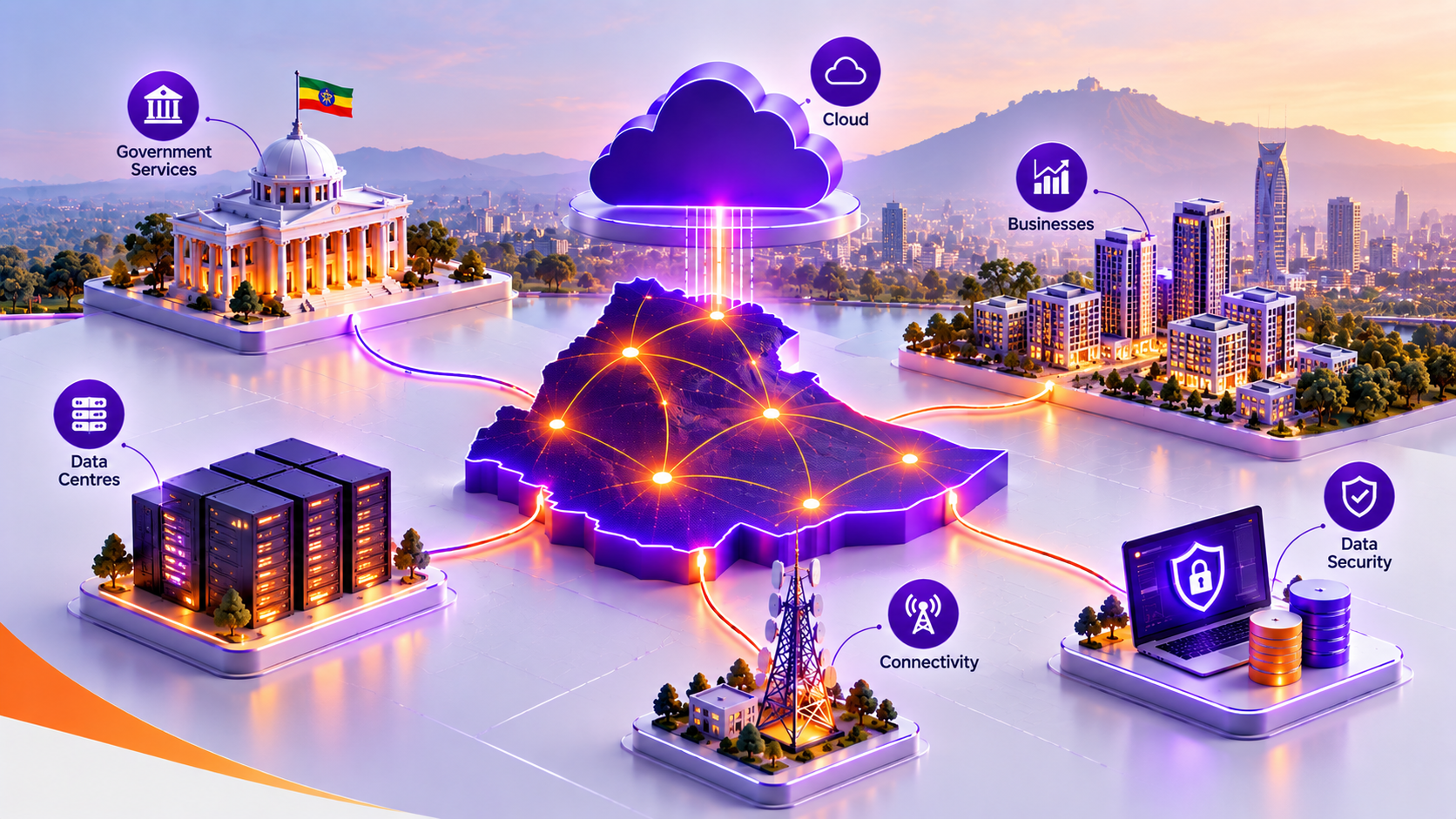
Within this environment, regional infrastructure providers such as Wingu Africa operate as part of a broader ecosystem shaped by both global cloud architectures and local infrastructure realities. The most effective CIOs are therefore those who interrogate these structural constraints early, rather than discovering their implications after migration has already occurred.
1. Where does control of data truly sit when systems are distributed?
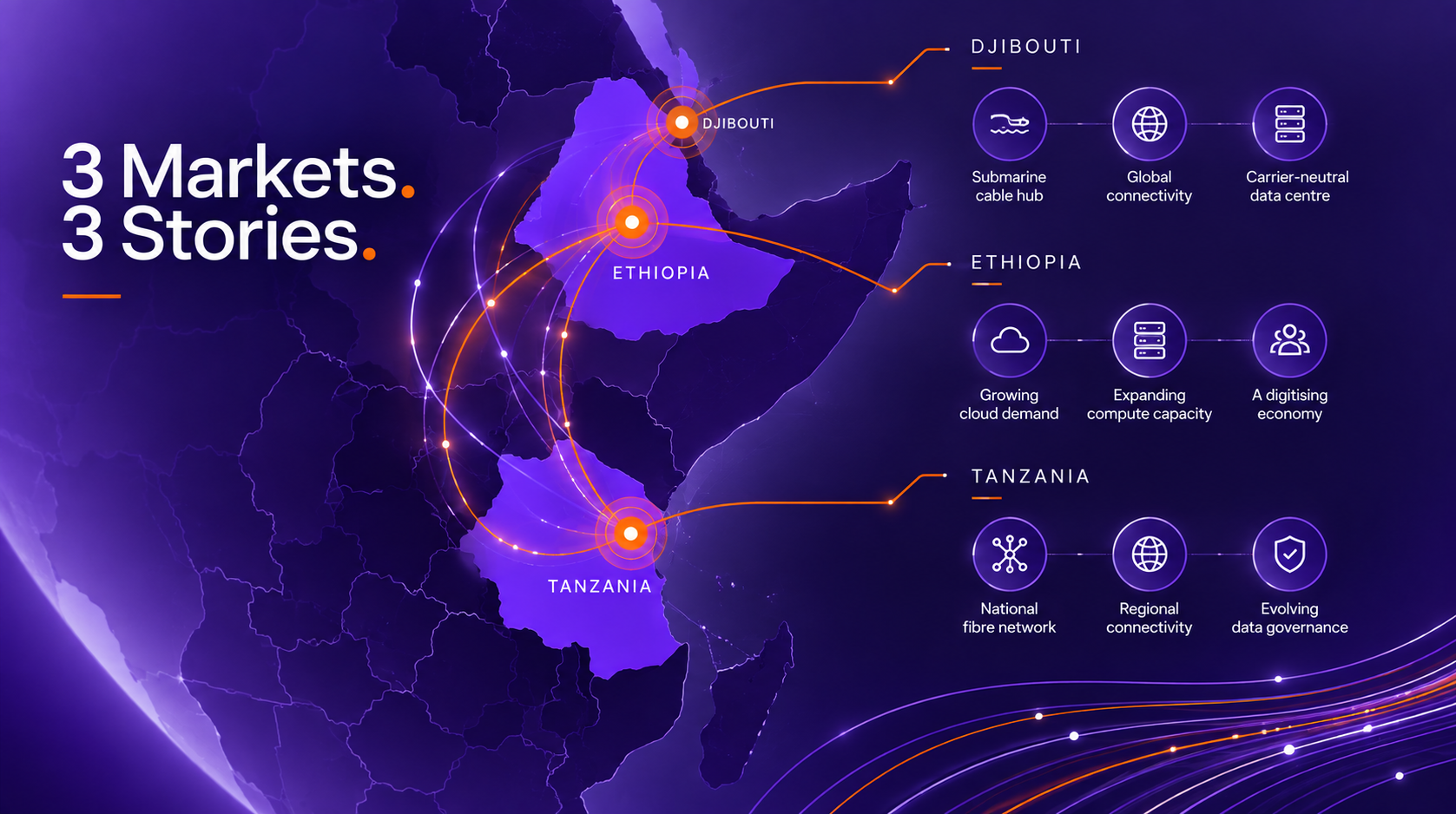
The first question CIOs must consider is not simply where data resides, but how control is exercised once data is distributed across multiple platforms, service layers, and jurisdictions. This issue has become more pronounced as Tanzania operationalises its Personal Data Protection framework, Ethiopia continues broader digital economy reforms, and Djibouti strengthens its role as a regional connectivity hub linking subsea cable systems into inland markets.
Recent African digital governance initiatives increasingly position data governance as a core component of national digital strategy rather than a standalone compliance function, reflecting a shift toward more operational forms of accountability. At the same time, cloud governance analysis has highlighted that when workloads, applications, backups, and processing are distributed across jurisdictions, determining the applicable legal and regulatory framework can become significantly more complex.
Disaster recovery design sits directly within this dynamic, since replication strategies that extend beyond East Africa may introduce legal or operational dependencies that only become visible during incident response. Cybersecurity further reinforces this relationship, as the location of logs, identity systems, and forensic data can materially influence how quickly and effectively incidents are resolved.
For this reason, infrastructure proximity is increasingly viewed as a governance enabler as much as a technical one, with regional hosting environments helping to reduce unnecessary complexity in control chains while improving alignment with local regulatory expectations.
2. Can uptime promises survive East Africa’s network reality?
The second question concerns whether published uptime metrics translate into real-world service availability once systems are deployed within East Africa’s infrastructure environment. Although global cloud platforms are designed for resilience at scale, actual service experience in this region is shaped by a combination of subsea connectivity, terrestrial fibre stability, and last-mile network performance.
Djibouti’s role as a landing point for multiple submarine cable systems such as EASSy and PEACE has significantly improved international connectivity, while Tanzania continues to expand its national fibre backbone and Ethiopia gradually liberalises its telecommunications sector. Despite these developments, connectivity quality and infrastructure maturity remain uneven across and within markets, with performance variability still influencing application behaviour. This creates a distinction between platform availability and user-perceived performance, where services may remain technically online while experiencing latency or congestion-driven degradation. For CIOs operating financial systems, logistics platforms, or public service applications, this distinction becomes operationally significant, since service quality is defined as much by responsiveness as by uptime.
Security considerations intersect with this layer of the stack, as distributed denial-of-service events, routing disruptions, or credential-based attacks may not always cause full outages but can still degrade service performance in ways that resemble availability failures. In such scenarios, resilience becomes a combined outcome of both infrastructure design and network behaviour.
3. What is the real cost once connectivity, security, and recovery are included?
The third question CIOs often revisit after migration is why cloud expenditure frequently diverges from initial forecasts. In most cases, this divergence is less about pricing models themselves and more about the operational factors that are not fully captured in early-stage cost planning.
While compute and storage represent the most visible components of cloud pricing, organisations in East Africa must also account for data transfer costs, cross-region replication, and continuous synchronisation between environments, all of which can materially increase total expenditure. Broader digital infrastructure analysis continues to show that connectivity and bandwidth costs remain structurally higher in parts of Sub-Saharan Africa compared to many global markets, even as network capacity improves.
Currency exposure further compounds this challenge, as most hyperscale cloud services are billed in US dollars, leaving organisations across East Africa exposed to exchange rate volatility that can significantly affect annual IT planning and budgeting cycles.
Disaster recovery introduces additional structural cost considerations, particularly where organisations maintain warm standby environments across multiple regions, sometimes outside the continent. While this may enhance theoretical resilience, it can also increase infrastructure duplication without necessarily improving recovery performance in localised failure scenarios. At the same time, cybersecurity tooling such as identity governance, advanced threat detection, and compliance monitoring introduces recurring costs that scale with usage rather than static infrastructure size.
Taken together, these dynamics shift cloud economics away from predictable consumption-based models toward more variable and dependency-driven expenditure patterns. In this context, regional providers are increasingly evaluated not as a mechanism for reducing cost outright, but as a way of improving predictability through local infrastructure presence and local-currency billing structures that reduce exposure to external volatility.
4. How easily can systems recover or move when something goes wrong?
The fourth question is whether systems can be recovered, migrated, or restructured without introducing disproportionate technical or operational friction. This consideration is central to understanding vendor lock-in, which often emerges not as a contractual issue but as an architectural one.
Modern cloud environments increasingly rely on tightly integrated managed services that improve efficiency and reduce operational overhead. However, once systems are built around proprietary databases, identity frameworks, or orchestration layers, portability between environments often requires structural redesign rather than straightforward migration.
Disaster recovery strategies are particularly affected by this dynamic, since tightly coupled primary and backup environments may replicate failure conditions as effectively as they replicate data. Similarly, cybersecurity and incident response processes depend on whether critical systems such as logs, authentication services, and forensic data can be accessed independently of a single provider’s control plane.
For this reason, many organisations in East Africa are beginning to design systems with portability in mind from the outset, not because frequent migration is expected, but because maintaining optionality reduces long-term structural risk. Hybrid architectures supported by regional infrastructure providers are often used to preserve this flexibility while maintaining integration with global platforms.
5. Is the architecture aligned with how East Africa’s digital infrastructure is actually evolving?
The final question is whether current cloud architecture decisions reflect the trajectory of regional infrastructure development. This is increasingly important because infrastructure in East Africa is evolving at different speeds across different markets, creating a non-uniform digital environment.
Djibouti continues to strengthen its position as a global connectivity hub, Tanzania is expanding national fibre coverage and data infrastructure capacity, and Ethiopia is undergoing gradual telecommunications liberalisation that is reshaping access to digital services. Recent International Telecommunication Union (ITU) connectivity indicators continue to show steady improvements across the region, while also highlighting persistent asymmetries between core urban hubs and secondary or rural areas.
Cyber security maturity is improving in parallel, although implementation capacity varies significantly across jurisdictions. As a result, resilience outcomes are often shaped more by architectural design decisions than by regulatory frameworks alone.
Within this context, disaster recovery, performance expectations, and security posture increasingly converge into a single architectural question: where workloads are hosted and how they are distributed across environments. CIOs who design systems assuming static infrastructure conditions often find themselves revisiting foundational assumptions within relatively short timeframes, while those who build for modularity tend to achieve greater long-term stability.
Regional infrastructure providers such as Wingu Africa therefore sit within a hybrid model that reflects the region’s evolving digital landscape, offering infrastructure alignment with local growth patterns while maintaining connectivity to global ecosystems.
Learn more about us.