Learning
Research
May 12, 2026
Wingu News
Driven by regulatory reform, increasing competition, and the steady expansion of digital financial services, banks and financial institutions across East Africa are modernising at pace. They are extending their reach through mobile platforms, agent networks, and real-time payment systems, reshaping how financial services are delivered and accessed across the country.
Yet beneath this transformation lies a constant requirement that has not changed: the infrastructure supporting these services must remain continuously available, secure, and stable. As financial ecosystems become more digitally dependent, the expectation is no longer occasional availability but uninterrupted performance under all operating conditions.
At the same time, the global operating environment has grown increasingly complex. Supply chains have tightened, energy markets have become more volatile, and fuel availability in many regions has faced sustained pressure. For organisations across East Africa, these dynamics introduce additional layers of operational risk, particularly in sectors that rely on uninterrupted power and connectivity. In financial services, where downtime carries both operational and systemic consequences, resilience is not simply a design consideration but a fundamental requirement.
It is within this context that Wingu Africa reaffirms its long-standing commitment to uninterrupted service delivery for clients operating across its East African footprint, including its strategically located facilities in the region. This commitment is not reactive or situational; it is embedded in the design principles, operational discipline, and governance frameworks that define the infrastructure itself.
East Africa’s Banking Sector at a Critical Inflection Point
The pace of transformation within East Africa’s financial ecosystem is both measurable and significant. Across multiple markets, transaction volumes, digital account adoption, and mobile money usage continue to grow rapidly, reflecting expansion in both traditional banking and digital financial services e.g. according to the National Bank of Ethiopia’s 2025 Financial Stability Report, transaction accounts have now exceeded 300 million¹, reflecting rapid expansion in both traditional banking and digital financial services.
Digital channels continue to play a central role in this evolution. National digital economy strategies across the region, including digital payments frameworks, interoperability initiatives, and digital identity systems, are contributing to the rapid uptake of mobile and online banking platforms. Complementing this, global institutions such as the World Bank highlight that digital financial services are expanding access across East Africa, driving productivity gains, improving economic participation, and supporting broader structural transformation.
For financial institutions, this convergence of regulatory ambition and customer expectation has fundamentally shifted the operational baseline. Systems that were once designed for high availability are now expected to deliver continuous availability. Core banking platforms, payment switches, ATM networks, agent banking infrastructure, and digital channels must perform consistently, even as transaction volumes and user demand continue to rise.
In this environment, even brief periods of disruption can have far-reaching consequences, affecting customer confidence, regulatory compliance, and broader financial stability.
Infrastructure as a Foundation for Financial Stability
The reliability of modern financial services is inseparable from the infrastructure on which they operate. Data centres have evolved from passive hosting environments into active enablers of economic activity, carrying responsibility for the uninterrupted performance of mission-critical systems.
Across Africa, investment in digital infrastructure is accelerating in response to this demand. Industry analyses estimate that data centre capacity across the continent is expected to grow at an annual rate of approximately 11–12%2, driven largely by financial services, telecommunications, and cloud adoption. Within this trajectory, East Africa remains a key growth region, both as a rapidly digitising financial hub and as a strategic corridor for global connectivity.
However, capacity alone does not define resilience. What matters more is how infrastructure is engineered, maintained, and operated on a continuous basis. Global standards provide the framework, but it is consistent execution that determines whether those standards translate into real-world reliability.
Tier III Standards, Applied in East Africa
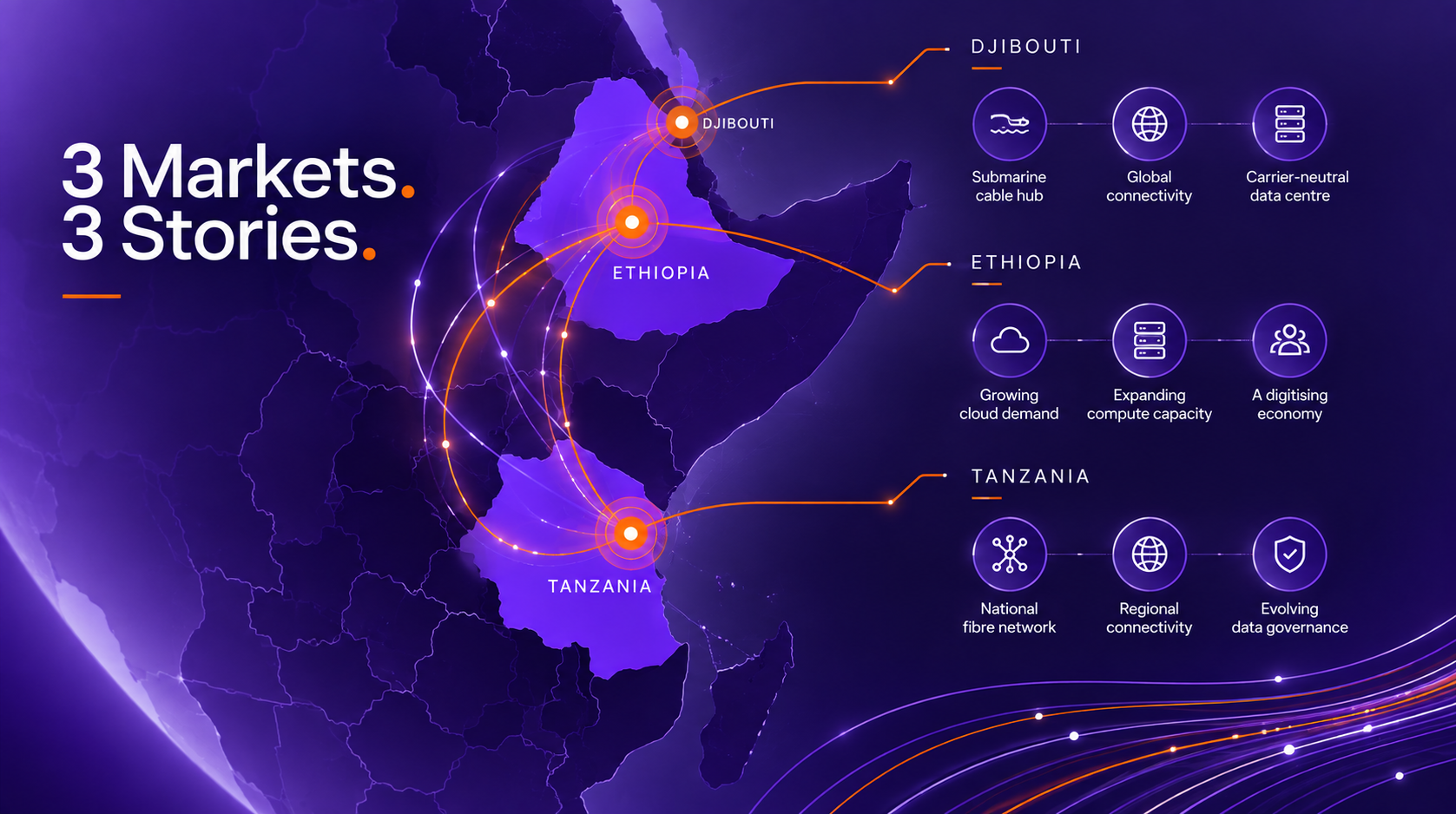
Wingu Africa’s regional facilities in Ethiopia, Tanzania and Djibouti are designed and operated to meet Tier III data centre standards, a globally recognised benchmark defined by concurrent maintainability, N+1 redundancy across critical systems, and a design availability of 99.982%.
For financial institutions, these standards translate directly into operational assurance.
Concurrent maintainability allows essential maintenance to be carried out without interruption to live environments, removing dependency on planned downtime. N+1 redundancy across power, cooling, and network systems ensures that no single component failure can disrupt operations, maintaining service continuity even during maintenance or fault conditions. The resulting design availability provides a quantifiable measure of uptime aligned with the expectations of financial regulators and institutions managing critical infrastructure.
These standards are not theoretical assurances, but operational realities embedded into daily execution. Over the past three years, Wingu Africa has maintained uninterrupted operations across all of its data centres, with no outages recorded across its regional facility footprint. This operational consistency supports workloads that include core banking systems, payment processing platforms, ATM and agent networks, digital channels, and regulatory reporting environments.
Power and Fuel Continuity as an Operational Discipline
Power infrastructure remains one of the most critical determinants of data centre resilience, particularly in environments where external energy conditions can fluctuate. In recent years, global supply chain disruptions and shifts in energy markets have further highlighted the importance of structured and proactive energy management.
Across East Africa, where economic growth continues to drive rising energy demand, ensuring uninterrupted power supply requires both infrastructure and operational discipline.
Wingu Africa’s facilities are built on fully redundant power architectures designed in line with Tier III principles, incorporating multiple independent layers of backup systems to maintain continuity in the event of grid instability or outage scenarios.
This infrastructure is further reinforced through diversified fuel supply arrangements with multiple accredited providers, reducing dependency on any single source and mitigating exposure to supply chain disruption. On-site fuel reserves are maintained significantly above standard industry thresholds, enabling extended operational autonomy when external conditions are constrained.
Supporting this framework is a dedicated continuity team responsible for real-time monitoring, planning, and execution of power management strategies. Their role is to anticipate potential risks and ensure mitigation measures are activated proactively, maintaining stability without disruption to client operations.
The objective remains clear and consistent: clients operating within the facility remain fully insulated from external volatility, regardless of broader market or energy conditions.
A Pan-African Platform Behind Every East African Client
While local resilience forms the foundation of service delivery, it is further strengthened through integration into a broader regional infrastructure platform. Clients hosted across East Africa benefit not only from local facilities but also from Wingu Africa’s interconnected presence across the continent.
A key element of this network is the company’s Tier III-certified facility in Djibouti, one of Africa’s most strategically significant connectivity hubs. As a primary landing point for major subsea cable systems connecting East Africa to global networks, Djibouti plays a central role in regional and international data exchange.
For East African financial institutions, this creates meaningful strategic advantages. Disaster recovery architectures can be extended across geographically distinct but operationally integrated environments, strengthening resilience without adding unnecessary complexity. Cross-border connectivity also enhances the efficiency of international transactions and settlements, improving latency and supporting higher performance across financial systems.
Importantly, this capability is delivered within a unified operational framework. Institutions are able to maintain primary infrastructure within their home markets while leveraging regional redundancy and connectivity, without the fragmentation or operational overhead of managing multiple independent providers.
Supporting East Africa Through Every Cycle
East Africa remains a core region for Wingu Africa, defined by long-term investment, operational presence, and sustained partnership. Through its facilities and regional infrastructure footprint, the company continues to support the evolution of the region’s financial sector by enabling the infrastructure required for growth, innovation, and stability.
In periods of global uncertainty, this role becomes increasingly significant. External pressures, ranging from energy volatility to supply chain constraints and broader macroeconomic shifts, can introduce unpredictability into operating environments. Yet financial resilience ultimately depends on the strength, discipline, and reliability of the infrastructure that underpins it.
Wingu Africa continues to operate with rigorous standards, sustained investment in redundancy, and a continuous focus on operational resilience, ensuring that financial institutions across East Africa can scale with confidence, operate with stability, and remain prepared for what comes next.
Learn more about us.