Learning
Research
July 29, 2026
Wingu News
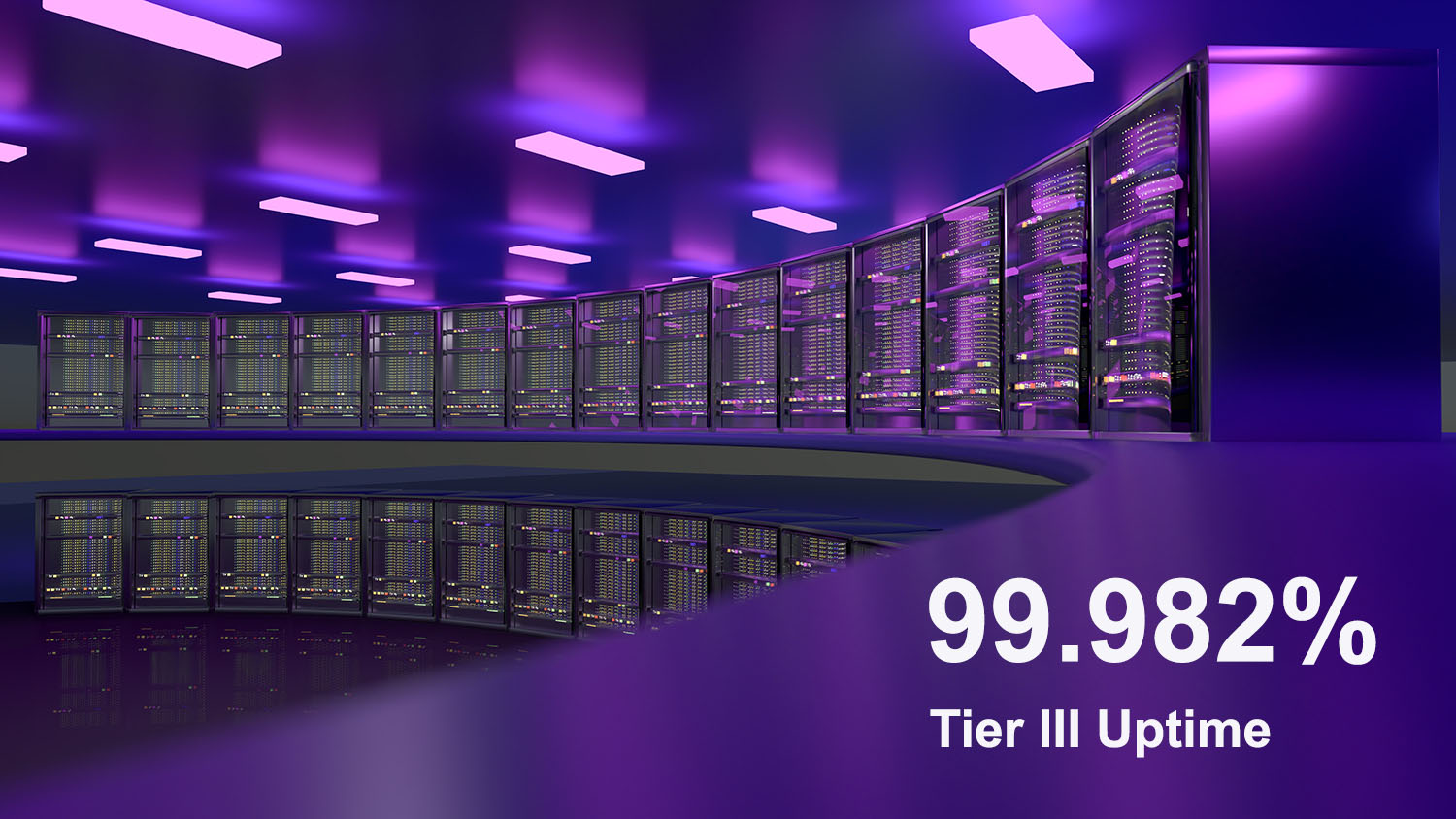
When organisations choose a data centre or cloud provider, one of the first figures they look at is the uptime guarantee. On paper, a number such as 99.982% can look like just another line on a specification sheet. In reality, it represents the difference between uninterrupted business operations and costly disruption, between maintaining customer confidence and damaging a hard-earned reputation.
As businesses across East Africa continue to digitise, uptime has become a business priority rather than simply an IT metric. Banks rely on real-time transactions, telecoms operators support millions of mobile users around the clock, governments are expanding digital public services, and enterprises increasingly depend on cloud-based applications to serve customers without interruption. In this environment, every minute of downtime has consequences that extend well beyond the data centre floor.
The value of a high uptime commitment is not found in the percentage alone. It lies in the engineering, operational discipline and continuous investment required to consistently deliver services that organisations can depend on.
What 99.982% actually means
99.982% is not an arbitrary figure. It is the availability level defined by the Uptime Institute's Tier III standard, the classification given to data centres that are "concurrently maintainable," meaning power and cooling systems can be serviced or repaired without shutting anything down. Translated into real time, that guarantee equates to roughly 1.6 hours of unplanned downtime a year, compared with around 22 hours for a Tier II facility and close to 29 hours for Tier I.
Achieving this level of resilience requires significant capital investment and operational discipline, which is why the Uptime Institute itself notes that most data centres worldwide are built to Tier III: it delivers the redundancy and maintainability that mission-critical operations need. For the vast majority of banks, telecoms operators, enterprises and public sector bodies, Tier III strikes the right balance between reliability and cost, which is exactly why it has become the de facto baseline rather than a premium feature.
Downtime remains an expensive business risk
Despite continuous advances in infrastructure technology, outages have not disappeared. They have simply evolved alongside increasingly complex digital environments.
According to the Uptime Institute's Annual Outage Analysis 2026, serious outages continue to occur across the global data centre industry, although their overall frequency has gradually declined as operators improve resilience. 1 in 10 outages still results in serious or severe disruption, a reminder that the impact of a single incident can be substantial regardless of how infrequently it occurs. The report also found that failures to follow established operational procedures have become an even more significant contributor to outages than in previous years, underlining the importance of skilled operations alongside resilient infrastructure.1
Financial consequences remain equally significant. The Uptime Institute's 2026 Annual Outage Analysis found that more than half of organisations reported their most recent major outage cost over US$100,000, while one in five experienced losses exceeding US$1 million. These figures capture only the direct financial impact; they do not fully reflect longer-term reputational damage, customer dissatisfaction or lost business opportunities.2
For many organisations, the cost of downtime is measured well beyond lost revenue. It also touches regulatory compliance, customer trust, service-level agreements and competitive positioning.
Reliability begins long before an outage occurs
High availability is not the result of a single technology or one redundant piece of equipment. It is the outcome of carefully designed systems working together to eliminate single points of failure while allowing maintenance to happen without interrupting customer services.
Power infrastructure is duplicated, cooling systems are independently resilient, network connectivity is diversified across multiple carriers, and critical equipment is continuously monitored. Every component is designed with the expectation that failures may occur, so that alternative systems can take over seamlessly when they do.
Physical infrastructure alone, however, is no longer enough. Modern data centres increasingly rely on intelligent monitoring, predictive maintenance and automation to catch developing issues before they reach customers. Artificial intelligence and advanced analytics are helping operators detect anomalies earlier, optimise resource utilisation and reduce the likelihood of human error during routine operations, shifting providers from simply responding to incidents to preventing them altogether.
Operations matter just as much as infrastructure
Even the most sophisticated facilities can experience outages if operational practices are inconsistent.
The Uptime Institute's latest research reinforces a point the industry has recognised for years: people and processes matter just as much as technology. Human error continues to play a significant role in major outages, with procedural failures becoming increasingly prominent in recent years. That places greater emphasis on staff training, rigorous maintenance procedures, change management and continuous testing. High-availability environments need experienced engineering teams capable of managing planned maintenance, responding rapidly to unexpected events and following disciplined processes every day.
In practice, organisations purchasing colocation or cloud services are not simply investing in buildings and servers. They are investing in the expertise of the teams responsible for keeping that infrastructure running around the clock.
Why uptime matters even more in East Africa
The sectors driving this need for reliability are moving fast, and the region adds a layer of urgency the global averages don't capture. As East Africa's digital economy matures, tolerance for service interruptions continues to fall, and businesses operating across multiple countries need infrastructure that delivers consistent performance while staying close to their users.
Hosting workloads within regional facilities, rather than relying exclusively on infrastructure thousands of kilometres away, supports lower latency, improved data sovereignty and greater operational control, advantages that matter as much for day-to-day performance as they do for regulatory and compliance requirements.
This is the gap Wingu Africa was built to close, with Tier III facilities designed to the concurrently maintainable standard across its focus markets. For organisations serving customers in Djibouti, Ethiopia and Tanzania, resilient regional infrastructure allows applications to perform consistently while reducing dependency on distant international connectivity. Reliable local infrastructure also strengthens broader digital ecosystems by supporting fintech innovation, content delivery, enterprise cloud adoption and emerging artificial intelligence applications.
Reliability as a competitive advantage
Customer expectations have shifted. Consumers rarely distinguish between the underlying technology providers responsible for delivering a digital service; they simply expect it to work whenever they need it.
Whether booking travel, transferring money, accessing healthcare records or taking an online course, users quickly lose confidence when services become unavailable. For businesses, this means infrastructure reliability directly shapes customer experience. An organisation known for dependable digital services builds trust over time, while repeated interruptions can push customers toward alternatives, particularly in competitive industries where switching providers has never been easier.
Infrastructure decisions, in other words, influence not only day-to-day operational performance but also customer retention and long-term business growth.
Looking beyond the SLA
A useful due-diligence exercise is to ask providers what specifically sits behind their SLA: Is the Tier rating independently certified by the Uptime Institute, or self-declared? How diverse are the network carriers? How often is resilience actually tested, rather than assumed? How experienced is the team on shift at 2am?
The Uptime Institute highlights that operators continue investing heavily in resilience while managing rising power demand, higher operational costs and rapidly evolving AI workloads, reminder that maintaining a Tier rating is an ongoing commitment, not a certificate earned once and forgotten. This continued investment, in both facilities and operational excellence, is what Wingu Africa point to when clients ask why the rating matters more than the number itself.
More than a percentage
As East Africa's digital economy continues to expand, organisations are placing more of their operations, customer interactions and strategic growth on digital platforms than ever before. The infrastructure decisions made today will shape how well they can compete tomorrow.
99.982% is, in the end, not simply a technical benchmark. It is the Tier III standard doing its job quietly in the background, the assurance that when businesses need their infrastructure most, it will be ready to perform.
Learn more about us.