Learning
Research
August 18, 2026
Wingu News
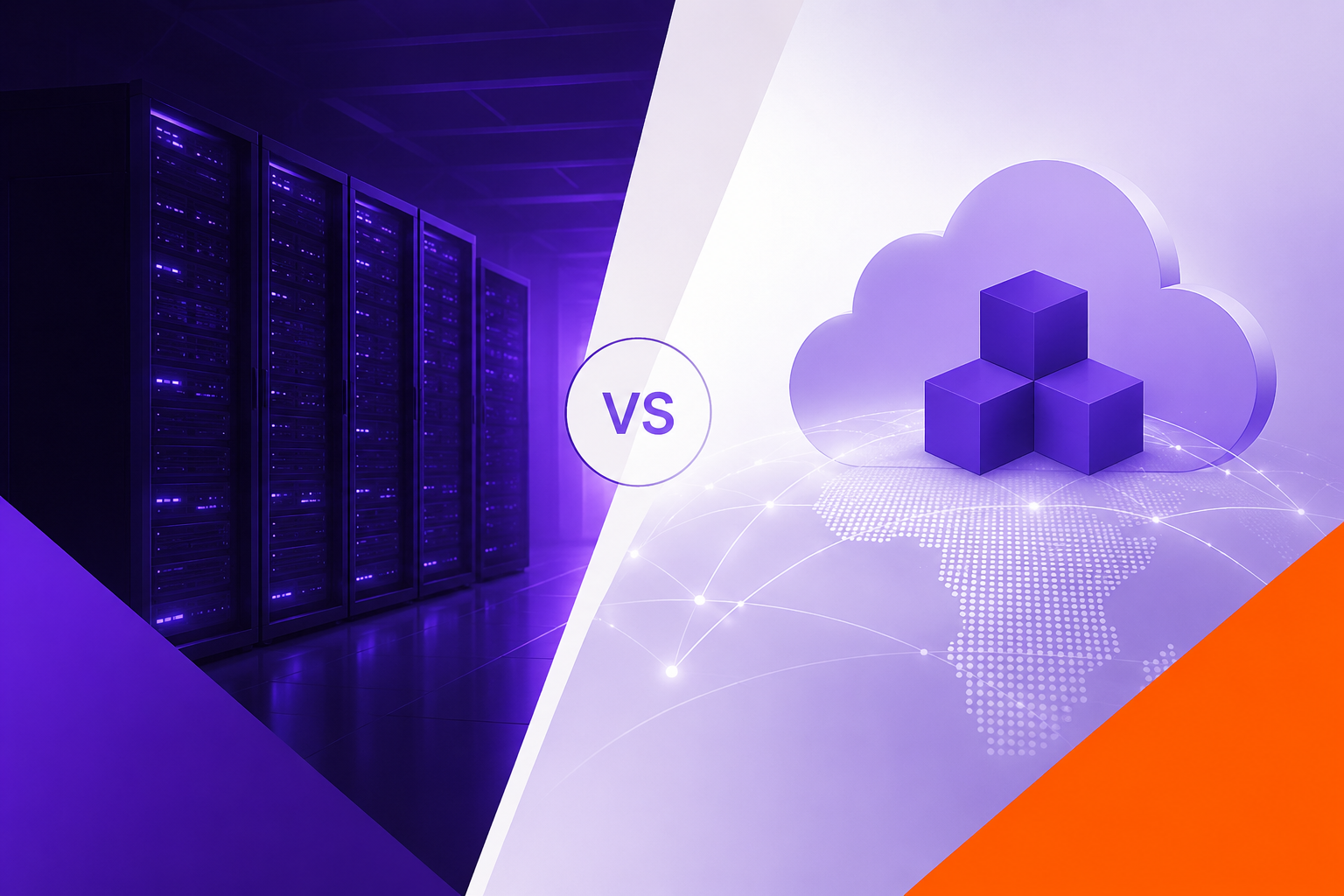
For businesses in Ethiopia, the decision between running IT infrastructure on-premises and moving workloads to cloud or colocation is becoming harder to ignore, largely because what was once a purely technical choice has evolved into a business decision shaped by currency volatility, unreliable power, changing data protection requirements and rising demand for digital services.
That shift matters now because the economics of owning infrastructure have changed fundamentally. Since Ethiopia moved to a market-based foreign exchange system in July 2024, the exchange rate between the birr and major foreign currencies has shifted, affecting the purchasing power of local businesses when it comes to acquiring hardware and software that continue to be priced largely in foreign currency. At the same time, the country's new data protection framework has introduced clear requirements around where certain data can be stored and processed, adding a compliance dimension that didn't exist a few years ago.
For IT and finance leaders in Addis Ababa and across Ethiopia, the question is therefore less about whether cloud is inherently better than on-premises infrastructure, and more about which model offers the right balance of cost, resilience, compliance and flexibility for their particular business.
The Economics Have Shifted Against On-Premises
The traditional case for on-premises infrastructure is straightforward: a business buys its own servers, controls the environment, and avoids paying an ongoing hosting fee to an external provider. That model can still make sense for organisations with stable workloads and existing infrastructure already in place, but the underlying economics have become considerably harder to manage in Ethiopia today.
In July 2024, the National Bank of Ethiopia introduced a market-based foreign exchange regime, a change that affected the exchange rate between the birr and the US dollar,1 and the rate has continued to move since. This matters for purchasing power because servers, storage systems, networking equipment, cooling systems and much of the software used in enterprise environments are either imported outright or priced with reference to foreign currency. As a result, local businesses can find that a hardware refresh represents a larger birr-denominated cost than it once did, even when the underlying dollar price hasn't changed, and import logistics add a further layer of complexity, particularly for equipment entering the country through Djibouti.
For a business that needs to purchase a large amount of infrastructure upfront, this combination creates a considerable capital commitment at precisely the moment when foreign exchange remains a binding constraint. A cloud or colocation model doesn't eliminate exposure to currency movements, but it can reduce the need for a company to make large, infrequent hardware purchases and absorb the procurement and replacement risk on its own.
This distinction is worth holding onto; cloud and colocation don't automatically mean lower costs in every scenario, but they can make infrastructure spending more predictable, while shifting a meaningful share of the responsibility for hardware procurement, maintenance and capacity planning onto a specialist provider.
Power and Connectivity Still Shape the Decision
Power reliability remains one of the strongest arguments for taking a closer look at professionally managed infrastructure in Ethiopia. Businesses running their own server rooms face the same underlying electricity challenges as the rest of the economy, and the scale of that challenge is well documented. Recent research on Ethiopian manufacturing firms found that businesses experience roughly 39 power interruptions and 21 hours of downtime per month, with the average firm losing around ETB 51,777 per month as a result, equivalent to roughly 2.22% of its monthly revenue.2
For an ordinary office, an outage might be an inconvenience. For an on-premises server environment, however, it can quickly become an operational problem involving UPS systems, generators, batteries, fuel, cooling and equipment protection, all of which have to be purchased, maintained and tested so that they work reliably when the grid does not. A professionally operated data centre approaches this differently, spreading the cost of resilient power infrastructure across many customers so that redundant power systems, backup generation, cooling and monitoring become part of the facility itself rather than something each business has to build and maintain independently.
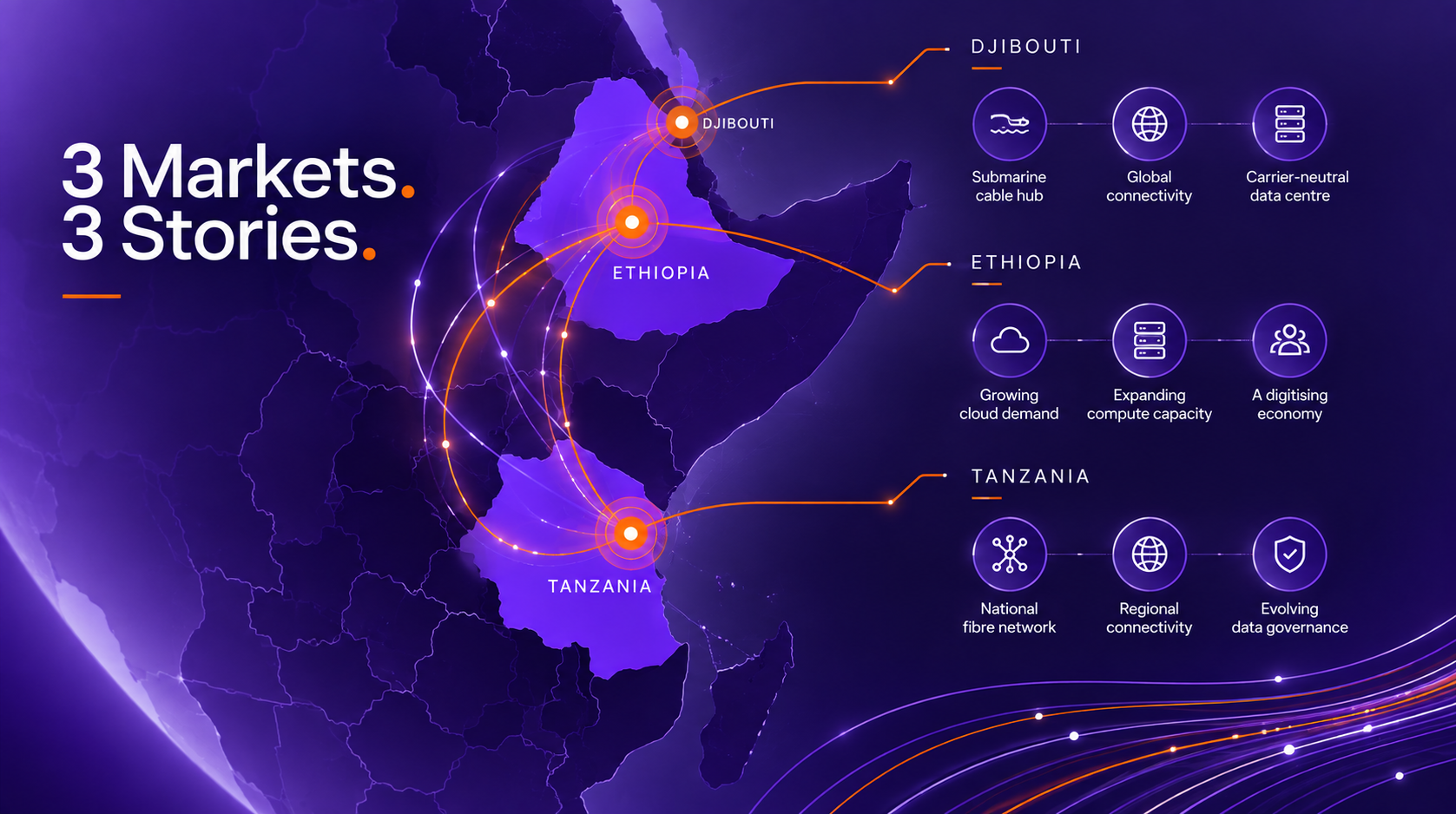
Connectivity presents a similar challenge. Ethiopia's geography means international connectivity depends heavily on routes running through neighbouring countries, including Djibouti, while domestic connectivity continues to develop. For businesses running critical systems from their own offices, the quality of the surrounding network infrastructure can therefore matter just as much as the quality of the server itself. A purpose-built data centre can typically offer more robust connectivity, a wider range of carrier options and stronger network architecture than most corporate offices could justify building on their own, and for workloads that depend on reliable access to users, branches, partners or digital services, that difference can be significant.
Regulation Favours Local Infrastructure, Not Necessarily Local Ownership
Data sovereignty was once one of the main arguments against cloud adoption in Ethiopia, with businesses understandably wary of placing sensitive information outside the country and losing control over where it was stored. The regulatory landscape has since changed. Ethiopia's Personal Data Protection Proclamation No. 1321/2024, which entered into force in July 2024,3 includes data localisation requirements under which locally collected personal data must be stored on servers within Ethiopia, and the framework also subjects certain categories of critical data to stricter requirements still.
For businesses, though, data localisation doesn't automatically translate into a requirement to build and operate their own infrastructure. The important distinction is between where data is hosted and who owns the physical infrastructure hosting it. A company can retain its data within Ethiopia while using a local colocation or cloud provider, provided the supplier and the chosen architecture meet the applicable regulatory requirements, and doing so can give businesses access to professionally managed power, cooling, physical security, connectivity and operational support without requiring them to build all of that capability themselves.
This distinction is particularly relevant for organisations currently using international public-cloud regions in Europe, the Gulf or South Africa. Rather than abandoning cloud-based operating models altogether, many of these businesses may simply need to rethink where their workloads and data are hosted, and whether a locally based cloud or colocation environment can meet their requirements just as effectively.
For regulated industries such as financial services, the compliance question carries even more weight. The National Bank of Ethiopia continues to develop its regulatory framework for the banking sector at a time when the country's financial system is becoming increasingly dependent on digital infrastructure; the NBE's own upgraded Ethiopian Automated Transfer System, for example, now processes more than 3.5 million transactions a year with an aggregate value exceeding ETB 5 trillion.4 The direction of travel is clear. Digital infrastructure is becoming part of the country's core economic infrastructure, and resilience, security and regulatory control are becoming just as important as raw computing capacity.
Scalability Is Where the Gap Widens
The biggest practical challenge with on-premises infrastructure isn't running the equipment itself; it's predicting how much equipment a business will actually need in the future. A company that buys servers today has to base that decision on tomorrow's expected demand. Overestimate it, and capital sits idle in equipment that may take years to reach full utilisation. Underestimate it, and the business eventually has to repeat the procurement process, often at a higher cost and with no guarantee that equipment will arrive when it's needed.
That trade-off is particularly difficult to manage in a market undergoing rapid digital adoption. Ethiopia's internet user base reached approximately 29.5 million by the end of 2025,5 while telebirr had grown to more than 60 million customers by June 2026.6 Together, the continued expansion of internet access and digital financial services is creating new demand for digital banking, e-commerce, online services, enterprise applications and data-intensive platforms, often faster than businesses can confidently forecast. That makes the ability to add computing, storage and network capacity without another major capital purchase increasingly valuable.
Cloud and colocation models manage that uncertainty very differently from traditional on-premises infrastructure. Rather than buying capacity for the highest expected level of demand, a business can expand its infrastructure footprint incrementally as requirements actually grow. That doesn't mean every workload belongs in the cloud, but it does give businesses another way of managing uncertainty, one that can prove especially valuable in an economy where both demand and the cost of imported equipment can shift quickly.
Where Local Providers Fit In
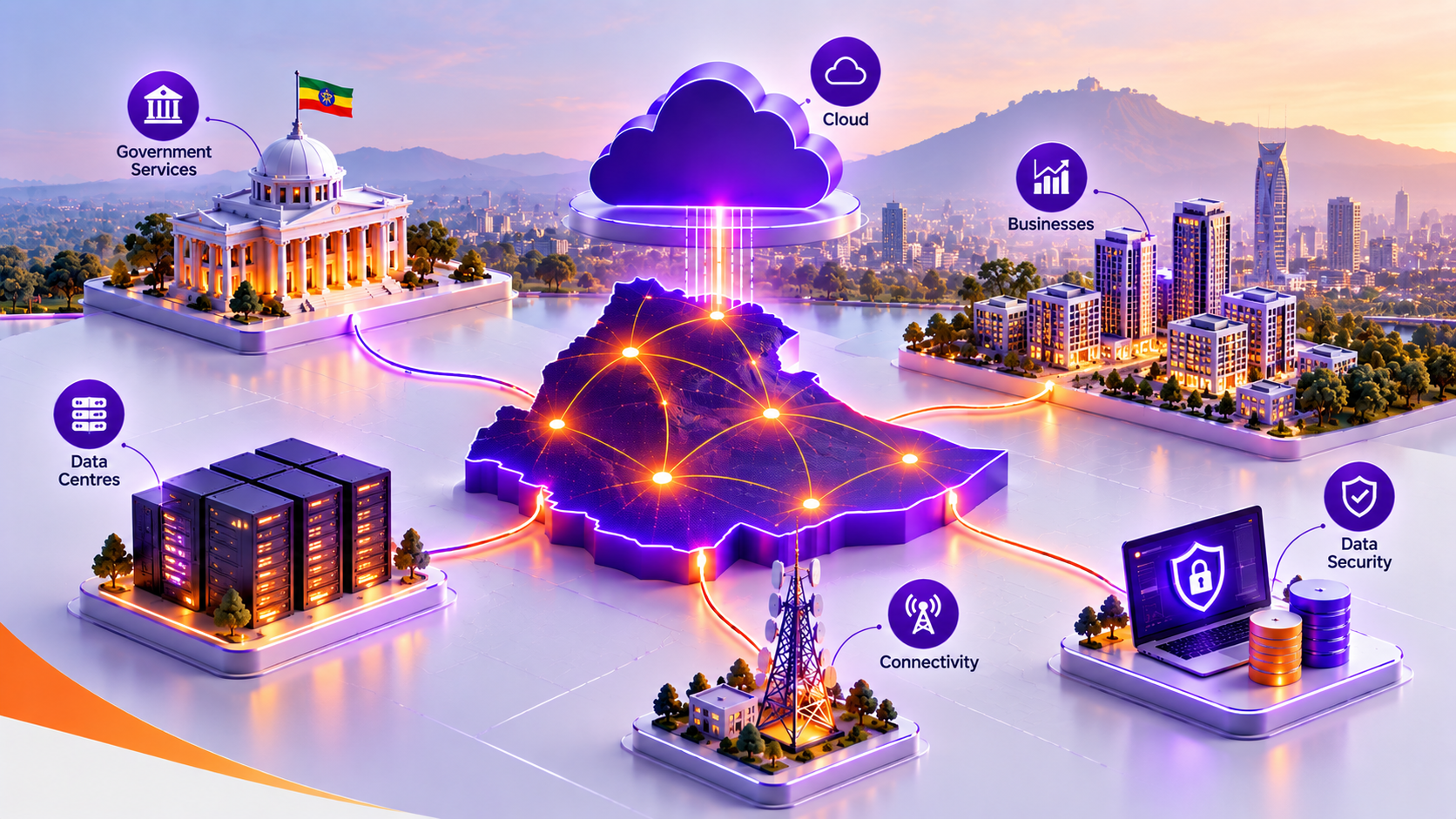
This is the gap that local data centre operators such as Wingu Africa are seeking to address. Wingu Africa's Addis Ababa facility has been designed with an eventual power capacity of around 10 MW, giving businesses access to resilient infrastructure without requiring each organisation to build its own power and cooling systems from scratch. The underlying model is one of shared infrastructure; instead of every company solving the same operational problems independently, those costs and capabilities are concentrated in a facility purpose-built to run critical IT workloads.
The same principle extends to compliance and connectivity. A facility designed around Ethiopia's regulatory environment can give businesses a way to keep data within the country while also providing the physical security, power resilience and network connectivity that business-critical applications demand. For organisations weighing cloud against on-premises infrastructure, this creates a third option that's often overlooked; local colocation and private cloud, which allows businesses to retain greater control over their environments and data while avoiding the full capital and operational burden of owning a data centre or server room outright.
How Much Risk Should the Business Carry Itself?
None of this makes on-premises infrastructure obsolete in Ethiopia. There are still organisations for which physical control, specialised hardware, legacy applications or very specific latency requirements make an on-premises environment the right choice. Some businesses also have substantial existing infrastructure investments that would make an immediate migration uneconomical.
The more useful question, then, isn't whether cloud beats on-premises in the abstract, but whether the benefits of owning infrastructure outweigh the risks and costs of managing it independently. For many businesses, those risks now extend well beyond the server room itself: currency volatility can raise the cost of imported equipment, unreliable electricity can disrupt operations, connectivity gaps can affect access to critical systems, and data protection rules can constrain where information is stored. At the same time, digital adoption is creating demand that can be difficult to predict more than a year or two out.
For many organisations, the likely outcome is a shift away from treating infrastructure ownership as the default choice. Instead, the decision becomes one of selecting the right combination of cloud, colocation and on-premises infrastructure for each workload individually. In Ethiopia's current environment, professionally managed local infrastructure can offer a compelling middle ground, one that keeps data in the country, reduces exposure to power and hardware risks, and allows businesses to scale without having to carry the full infrastructure burden themselves.
Learn more about us.