Learning
Research
February 18, 2026
Wingu News
As digital transformation accelerates across Africa, the conversation is shifting from connectivity to the strategic management of data itself. Enterprises are no longer focused solely on internet access or cloud adoption; they are increasingly concerned with where data resides, how it moves, and the influence it exerts on surrounding systems.
This dynamic is captured in the concept of the Data Gravity Index™ (DGx™), developed by Digital Realty. While the Index models major global metropolitan markets rather than East African countries directly, the structural dynamics it identifies are highly relevant to emerging digital economies such as Djibouti, Tanzania, and Ethiopia.
Understanding Data Gravity
Data gravity describes the idea that as data accumulates in a particular location, it begins to attract applications, services, and additional datasets. Over time, large concentrations of data become difficult and costly to move. The more business processes, analytics engines, and digital services that rely on a dataset, the more “weight” it carries, creating a form of inertia that shapes technology decisions in practical ways.
The DGx™ 2.0 expands on this by modelling how enterprise data is created, aggregated, and exchanged across global hubs. It frames data not simply as information to be stored, but as a measurable economic force capable of influencing digital ecosystems. Increases in data intensity closely track with enterprise digital transformation, cloud adoption, and the proliferation of latency-sensitive workloads such as AI and advanced analytics. As data grows in volume and exchange activity, its gravitational pull-on infrastructure strengthens.
Why Data Gravity Is a Strategic Issue
Enterprises today generate data at unprecedented rates. Financial transactions, mobile applications, streaming services, ERP systems, government platforms, and emerging AI workloads all contribute to steady growth. In East Africa, rapid mobile adoption and digital financial services have accelerated this trend, particularly in Tanzania and Ethiopia, where large populations are increasingly transacting and interacting online.
As data accumulates, it begins to influence infrastructure decisions. Moving large datasets across borders or between cloud providers is not only costly but operationally disruptive. Latency increases as data travels long distances, regulatory compliance becomes more complex, and network costs escalate. Over time, infrastructure strategy becomes reactive to data location rather than proactive.
For enterprises operating in Djibouti, Tanzania, and Ethiopia, this is particularly relevant. Many organisations initially adopted cloud services hosted in distant regions due to limited local infrastructure. While this model enabled rapid digitisation, it also created dependencies on remote data hubs. As data volumes grow, the drawbacks of distance, from performance limitations to regulatory challenges, become more apparent. Data gravity therefore becomes a strategic consideration rather than a technical footnote.
Data Gravity and the Role of Data Centres
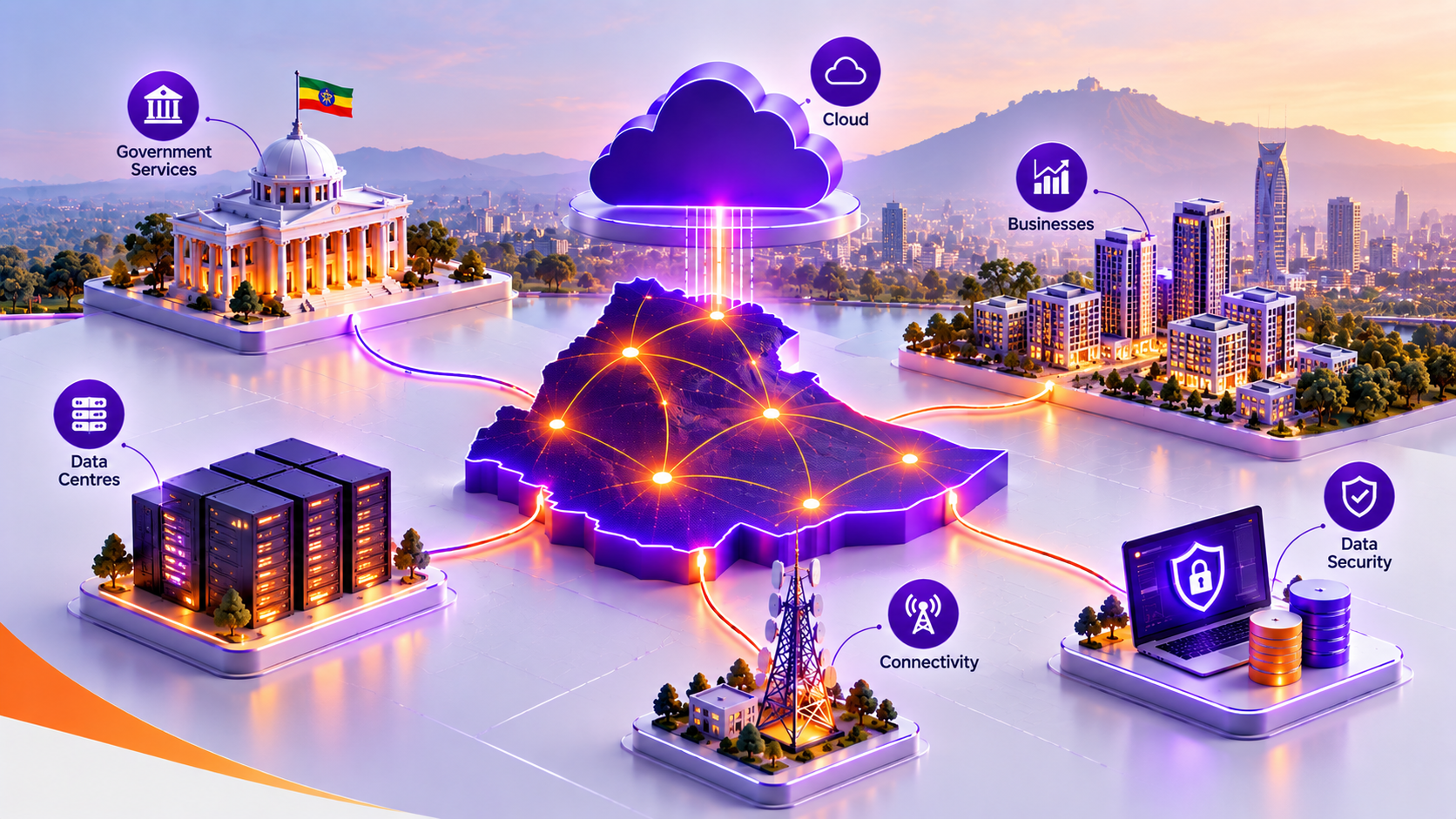
Data centres become the physical manifestation of data gravity; the anchors that determine whether value is captured locally or exported elsewhere. By storing, processing, and exchanging data close to its point of creation, local data centres reduce the distance between users, applications, and data, improving performance and enabling compliance with national regulations.
In Tanzania, sectors such as banking, telecommunications, e-commerce, and government services are generating increasingly transactional and behavioural data. Keeping this data within national borders reduces latency and strengthens regulatory compliance.
Ethiopia is experiencing similar dynamics. Economic reforms, telecom liberalisation, and the expansion of digital services are accelerating domestic data generation. According to the DGx™ framework, these growing concentrations gradually attract supporting services and digital ecosystems closer to the source.
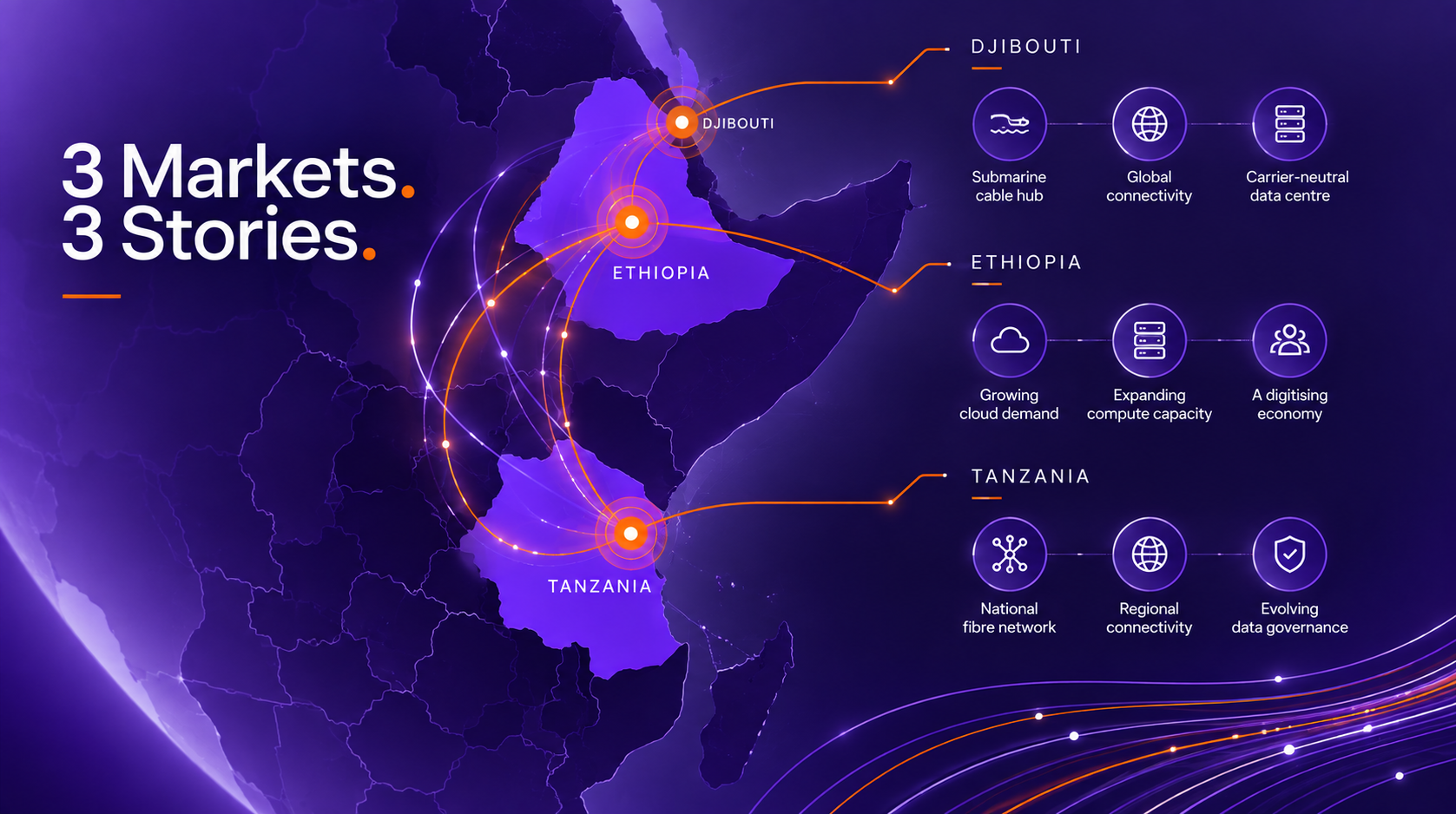
Djibouti occupies a unique position as a regional connectivity hub linking submarine cables and international networks. Yet connectivity alone does not create digital ecosystems; interconnection density does. By pairing connectivity with robust local data centres, Djibouti can evolve from a transit point into a true digital hub, capturing economic value that would otherwise flow elsewhere.
Enterprises in a Multi-Cloud and Hybrid World
Modern enterprises rarely operate in a single environment. Most leverage a mix of on-premises infrastructure, public cloud services, and private cloud platforms. This hybrid reality intensifies data gravity’s effects. Large datasets replicated across regions increase costs, while fragmented architectures introduce latency and security risks.
Well-positioned local data centres act as neutral interconnection platforms, enabling direct connections to cloud providers, network operators, and partners. For East African enterprises, this reduces dependency on distant internet exchanges and allows global cloud adoption without sacrificing local control.
Emerging technologies like AI and advanced analytics further amplify the need for high-performance computing close to large datasets. Moving petabytes of information offshore for processing is rarely efficient. As AI adoption grows across finance, healthcare, and logistics, demand for locally accessible, powerful infrastructure will continue to rise.
Regulatory and Economic Dimensions
Data protection, privacy, and digital sovereignty are increasingly top-of-mind for governments across Africa. Policies that mandate certain types of data to remain within national borders reinforce the need for local infrastructure. Enterprises lacking domestic hosting options may struggle to meet compliance obligations or incur high costs.
Beyond regulation, local data storage generates broader economic benefits. Value creation remains within the domestic economy, skilled IT jobs are created, and startups gain access to high-quality infrastructure. Reducing reliance on offshore hosting and international bandwidth also keeps capital local, supporting innovation and ecosystem resilience.
For Djibouti, Tanzania, and Ethiopia, investing in data centre capacity is about enabling the next wave of digital services, from fintech platforms to smart city applications. Data gravity suggests that where data accumulates, economic activity follows. Anchoring data locally ensures that value remains within the region.
Planning for the Next Decade
Data growth shows no sign of slowing. Population growth, urbanisation, and rising internet penetration across East Africa will continue to generate new data streams. Enterprises that plan infrastructure strategies with data gravity in mind will be better positioned to scale sustainably.
This requires viewing infrastructure not as a background utility, but as a strategic asset linked to competitive advantage. Decisions about application hosting, interconnection, and cloud adoption must consider the gravitational pull of data.
For data centre operators, the opportunity lies in building facilities that combine resilience, connectivity, and scalability. High availability standards, carrier neutrality, and robust interconnection ecosystems are essential. Enterprises need assurance that data can remain local without sacrificing global reach.
A Regional Opportunity
The forces described by the Data Gravity Index are shaping more mature markets, and the same dynamics are emerging in East Africa. As data volumes increase, the necessity of placing infrastructure strategically grows.
Djibouti, Tanzania, and Ethiopia each possess distinct advantages, from connectivity to population scale to economic reform. By aligning infrastructure development with data gravity, these markets can strengthen digital sovereignty, improve enterprise performance, and attract further investment.
The next chapter of digital transformation in East Africa will not be defined by connectivity alone, but by the strategic placement of infrastructure capable of supporting the region’s growing data mass. Markets that invest early in resilient, interconnected, carrier-neutral facilities will anchor digital ecosystems locally and capture the value that data gravity creates.
Learn more about us.