Learning
Research
December 2, 2025
Wingu News
East Africa's digital economy is expanding at a rapid pace, driven by rising internet penetration, widespread mobile connectivity, and growing adoption of cloud services and fintech innovation. As organisations move away from informal server installations toward standardised and/or professionally designed data centres, the reliability and resilience of these facilities have become essential to business success.
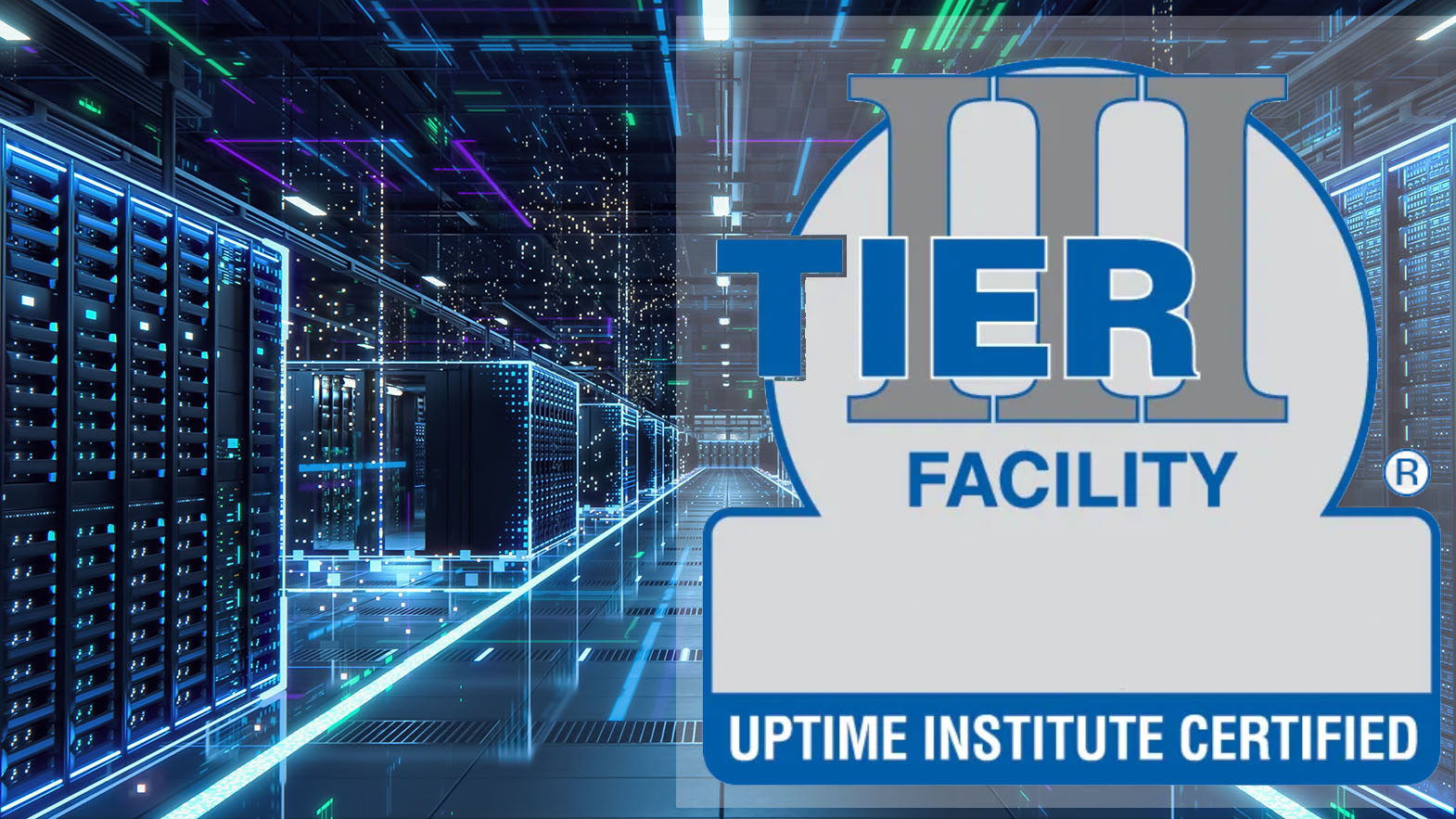
Among internationally recognised standards, the Uptime Institute tier model provides a clear benchmark for assessing data centre reliability. Tier III facilities represent the practical sweet spot for the region, offering robust performance without the cost and complexity of higher tiers. This blog explores why Tier III standard data centres have become the preferred choice for businesses and governments across East Africa, examining the technical advantages, operational benefits, and strategic drivers behind this investment.
A Growing Market with Clear Opportunity
The East African data centre market has matured significantly over the past decade. According to Statista, the region's market is forecasted to reach US$1.60 billion by the end of 2025, growing at 7.25% annually to reach approximately US$2.27 billion by 2030.
By the end of 2024, the region had nearly 30 MW of live critical-IT load, reflecting significant investment in professional infrastructure.1 While this represents significant progress, many facilities remain small-scale and lack the professional management or carrier neutrality expected globally. For enterprises, financial institutions, and government agencies, this context underscores the strategic importance of selecting facilities that meet internationally recognised standards like Tier III.
For organisations navigating cloud adoption, digital payments, e-government initiatives, and data residency requirements, selecting a facility built to a recognised operational standard is no longer a technical decision; it is a strategic one.
What Sets Tier III Apart?
Tier III data centres are classified as "concurrently maintainable," a technical designation reflecting a fundamental operational principle: every critical component can be serviced or replaced without interrupting service delivery. This capability is achieved through an N+1 design approach, where additional backup components are deliberately engineered into the infrastructure beyond what's strictly required for daily operations.
This engineered redundancy underpins the Tier III availability benchmark of 99.982%, translating into roughly 1.6 hours of permitted downtime annually. For nearly all enterprise, financial, and government workloads, this level of resilience is more than sufficient, offering a practical balance between performance, complexity, and long-term operational costs.
Crucially, Tier III reliability extends beyond physical systems. It is reinforced by structured operational disciplines; rigorous maintenance schedules, change control procedures, and well-trained technical teams, that collectively ensure consistent performance during both routine operations and unexpected conditions.
Why Tier III Matters for Your Organisation
For enterprises managing large-scale digital operations, Tier III facilities provide critical protection against costly service disruptions. Downtime carries far more than operational inconvenience; it directly threatens revenue generation, erodes customer satisfaction, and can trigger cascading business consequences that extend well beyond the initial outage.
This is especially true for financial services and fintech companies, where interruptions in payment systems, transaction processing, or customer access can trigger immediate and far-reaching consequences. A Tier III facility ensures that these critical systems remain available even when equipment is being serviced or unexpected outages occur, preserving business continuity and maintaining public trust.
E-commerce platforms, digital service providers, and cloud-first enterprises face similar imperatives. As competition intensifies and user expectations rise, uninterrupted service operation becomes central to customer experience and brand reputation. Likewise, government agencies, from tax authorities to e-citizen platforms, depend on resilient infrastructure to uphold data sovereignty requirements and provide uninterrupted public services. For these institutions, Tier III offers a level of engineered assurance that aligns with regulatory expectations and public policy objectives.
Regional Factors Driving Tier III Adoption
Tier III adoption across East Africa is driven by several interconnected regional realities. Power reliability remains a fundamental concern throughout the region. Although major cities like Nairobi, Kampala, Kigali, and Dar es Salaam have experienced grid improvements in recent years, outages and load-shedding continue to pose operational risks. Tier III's redundant power systems and uninterruptible power supply infrastructure effectively shield critical services from these disruptions.
Regulatory developments further reinforce demand. Governments across the region are introducing stronger data sovereignty and cybersecurity frameworks, requiring organisations to demonstrate that sensitive data is hosted within environments that meet recognised standards. Tier III facilities provide credible assurance that these requirements are genuinely met, helping organisations navigate an increasingly complex regulatory landscape with confidence.
Operational capacity considerations also influence infrastructure decisions. The complexity of building, staffing, and running a Tier IV facility often exceeds what regional talent pools and budgets can support sustainably. Tier III strikes a workable balance, delivering high resilience while maintaining an operational model that is feasible for most organisations in the region.
The Economics: Cost, Efficiency, and Growth
Investment in data centre infrastructure must ultimately align with business value. While Tier IV facilities offer marginally higher availability, the corresponding increase in capital expenditure, maintenance obligations, and staffing requirements is substantial. Tier IV demands full duplication of critical systems and highly specialised operational oversight, costs that are difficult to justify for all but the most extreme workload profiles.
Tier III, by contrast, delivers robust resilience within an economically sustainable framework. It supports the needs of the majority of enterprise, financial, and public-sector workloads while enabling efficient scaling over time. This architecture also lends itself well to distributed resiliency strategies: combining multiple Tier III facilities across separate geographic locations often provides superior practical redundancy compared to a single Tier IV site, while maintaining more reasonable cost structures.
For organisations focused on growth, innovation, and digital expansion, Tier III thus offers the optimal intersection of performance, flexibility, and financial discipline.
The Strategic Foundation for East Africa's Digital Future
Tier III data centres have become the backbone of East Africa’s evolving digital ecosystem because they align directly with the region’s infrastructure conditions, regulatory needs, and economic realities. They provide reliable protection against power instability, offer verifiable compliance with data sovereignty expectations, and deliver resilience without heavy capital investment associated with Tier IV facilities.
As enterprises, financial institutions, and governments continue to scale their digital footprints, Tier III facilities will serve as the foundational platforms supporting business continuity, security, and service excellence. In a region experiencing rapid digital transformation, the combination of operational certainty and economic practicality makes Tier III not just a viable choice, but the strategic standard for the decade ahead.
Learn more about us.